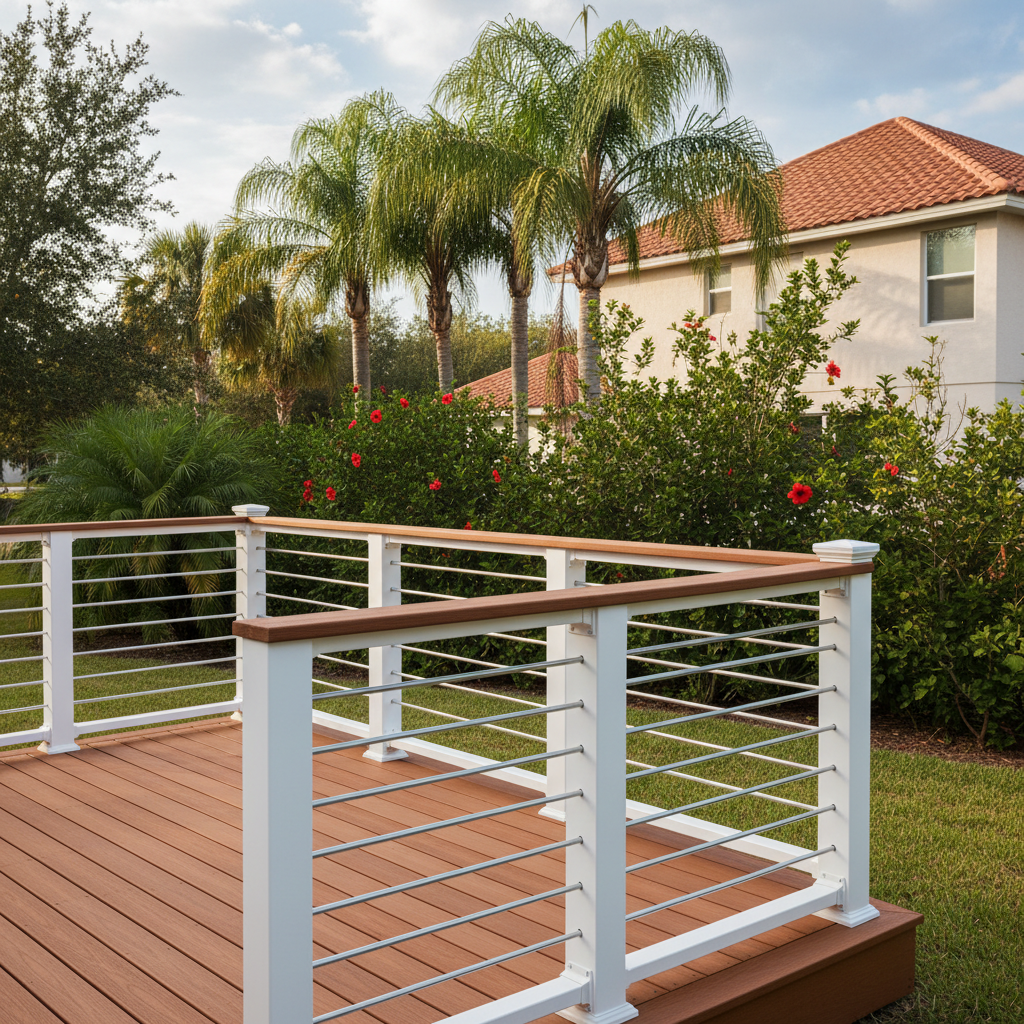
When you grab a deck railing and it wobbles right in your hand, it is a very scary feeling. Way too many backyards around College Park and Winter Park are rocking unsafe and flimsy setups because shortcuts were taken during the planning phase. Deck Railings are not just decorative trim to finish off the look of your outdoor living space. Deck Railings are also an important safety feature, especially if you have kids running around or a second-story deck catching those heavy afternoon summer thunderstorms.
When Orlando Deck Construction looks at bids and existing setups across Central Florida, we see the same avoidable blunders over and over again. Homeowners need to watch out for these issues so a project does not turn into a headache.
Ignoring Local Orlando Building Codes
Builders cannot just slap up any old handrail and call it a day. Building codes exist for a reason. In our area, local inspectors are strict about height requirements and baluster spacing. Most residential decks require Deck Railings to be at least 36 inches high, and those vertical balusters cannot have gaps wider than four inches so a toddler cannot squeeze through. Orlando Deck Construction has taken calls from homeowners in a panic because their cousin built a custom horizontal cable rail that completely failed code inspection. Fixing a non-compliant install after the fact costs double.
Skimping on Post Connections
The single weakest point of any railing is where the post meets the rim joist. Cheap contractors or rushed DIYers will bolt the posts right to the outside face of the deck frame using standard screws. That is a disaster waiting to happen. If someone trips and falls against that railing, a face-mounted post can rip right out of the wood, taking a chunk of the framing with it. Posts need to be tied directly into the framing with proper through-bolts and tension ties. Orlando Deck Construction over-engineers these connections because our high winds and heavy downpours test every square inch of your outdoor structures.
Choosing Materials That Cannot Handle Florida Weather
Our humidity, blazing sun, and torrential summer rains are brutal on building materials. If you choose cheap untreated pine for your railing system, you will be replacing it or fighting splinter rot within 3 to 5 years. Even metal components need a good powder coat to survive. Aluminum and composite sleeves have become popular for a reason; they stand up to the elements without warping or rusting out. Upfront savings should not tempt homeowners into buying materials that cannot take the local climate.
Hiring Based on Price Alone
Everyone loves a bargain, but the lowest bid almost always cuts corners where you cannot see them. If a contractor drops a quote that is thousands lower than everyone else, ask yourself what they are leaving out. Are they skipping permits? Are they using substandard fasteners that will rust and stain your deck boards by next season? A proper Deck Railing installation requires precision, patience, and structural know-how. Take your time vetting local pros who actually know how to build things to last in Central Florida soil and weather.
Planning a new deck or upgrading an old one should feel exciting, not stressful. If you want Deck Construction done right the first time without the guesswork, call Orlando Deck Construction for your project in Orlando, FL.