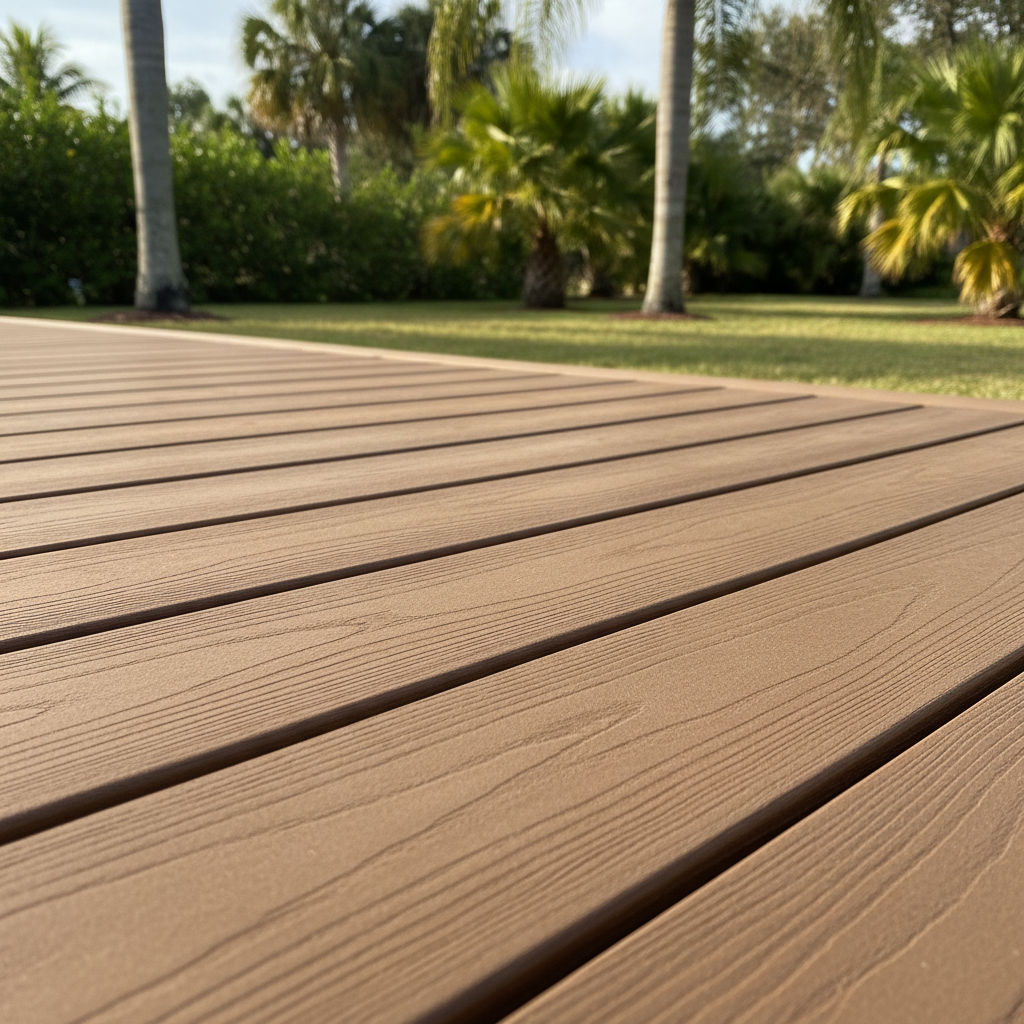
What exactly is a composite deck made of?
Alright, let's get right into it. When we talk about composite decking, we're not really talking about wood. Not in the traditional sense, anyway. It's actually a blend of different materials, usually wood fibers and recycled plastic. Think of it like a super-strong, engineered material that takes the best parts of wood—you know, the look and feel—and mixes them with the durability and low-maintenance qualities of plastic. The exact ratio can vary a lot between brands, but generally, you'll find polyethylene or polypropylene plastics combined with wood flour or other cellulose materials. They often throw in some bonding agents, UV inhibitors, and pigments too. This whole mix then gets extruded, which basically means it's pushed through a die to form the deck boards you see. It's not just a fancy name; it's a completely different animal than a traditional wood deck.
How long do composite decks really last here in Florida?
This is a big one, especially with our Orlando weather. People always want to know if it's truly worth the investment. Look, a well-installed composite deck, from a reputable brand, can easily last 25 to 30 years—sometimes even more. That's a huge lifespan compared to wood, which might need replacing or major repairs every 10-15 years, particularly with our humidity and intense sun. The key words here are 'well-installed' and 'reputable brand.' You really do get what you pay for. Cheap composite can delaminate or fade faster. But the good stuff? It holds up incredibly well against the constant sun, heavy rain, and even the occasional tropical storm we get here. You won't be dealing with rot, termites, or splintering like you would with natural wood, which is a huge relief.
Do composite decks get hotter than wood decks in the Orlando sun?
Yeah, they can. This is a common concern, and frankly, it's a fair question for anyone living in Central Florida. Composite decks, especially darker colors, tend to absorb and retain heat more than natural wood does. On a scorching summer day, a dark gray or brown composite deck can get pretty hot underfoot. I've seen it myself. It's not usually 'burn your feet' hot, but it's definitely noticeable. Lighter colors will reflect more sunlight and stay cooler. Some newer composite lines are also engineered with heat-mitigating technologies, but they're often a bit pricier. If you're planning on walking barefoot a lot, or if your deck gets direct, all-day sun, consider lighter shades or look into those specialized heat-reducing boards. It's just something you need to be aware of when you're making your color choice, right?
Is composite decking truly maintenance-free?
That's a myth, plain and simple. It's low-maintenance, not no-maintenance. You won't be staining, sealing, or sanding it every couple of years like you would with wood, and that's a huge win. But you still need to clean it. Dirt, pollen (and boy, do we get pollen here in Orlando!), leaves, and even mildew can accumulate. A good sweep and a wash with soap and water, or a specialized deck cleaner, a couple of times a year will keep it looking great. You might need to hit it with a pressure washer on a low setting if things get really grimy, but be careful not to use too high a pressure or a narrow tip, as that can damage the surface. So, no, it's not 'set it and forget it,' but it's pretty darn close compared to wood.
What about fading and scratching? Will my composite deck still look good in a few years?
Good question. Early composite decks definitely had issues with fading, but the technology has come a long way. Most reputable brands now offer capped composite boards. These have a durable, protective shell around the core that's designed to resist fading, staining, and scratching much better than uncapped versions. The UV inhibitors in that cap are critical for our intense Florida sun. As for scratches, they're more resistant than wood, but they're not invincible. Dragging heavy furniture, sharp objects, or even pet claws can still leave marks. If you're worried about it, choose a board with a more textured or variegated grain pattern; those tend to hide minor imperfections better than a smooth, solid color. You'll see some very minor, uniform fading over decades, but nothing like the drastic color loss of older products.
Are there different types or grades of composite decking I should know about?
Absolutely, it's not a one-size-fits-all deal. You've got your basic uncapped composite, which is usually the cheapest. It's a mix of wood and plastic, but without that outer protective layer. It's more prone to fading and staining. Then you move up to capped composite, which I just mentioned. This is where most people land, and it's what Orlando Deck Construction typically recommends for its balance of durability and value. Within capped composites, you'll find different levels of cap thickness and material quality, affecting scratch and fade resistance. Some brands offer multi-sided capping, meaning the cap goes all the way around the board, which is great for moisture protection. You also have different core materials—some use a solid core, others a hollow or scalloped core. Solid cores are heavier and feel more like wood underfoot. Hollow cores are lighter and can be more cost-effective. It really pays to look at the specifics of each brand and line.
Is composite decking environmentally friendly?
Well, that depends on how you look at it. On one hand, yes, many composite deck boards are made from recycled materials—often plastic bags, milk jugs, and wood waste from sawmills. So, it diverts a lot of stuff from landfills, which is a big plus. It also means you're not cutting down new trees for your deck. On the other hand, it's still a manufactured product, and the manufacturing process does use energy. And while it lasts a long time, it's not always easily recyclable at the end of its very long life, depending on the specific plastic and wood fiber mix. So, it's not perfectly 'green,' but it's certainly a more sustainable choice than using virgin lumber for every deck. For a lot of folks, the fact that it lasts so long and doesn't require harsh chemical treatments like stains and sealers makes it a win for the environment in the long run.